
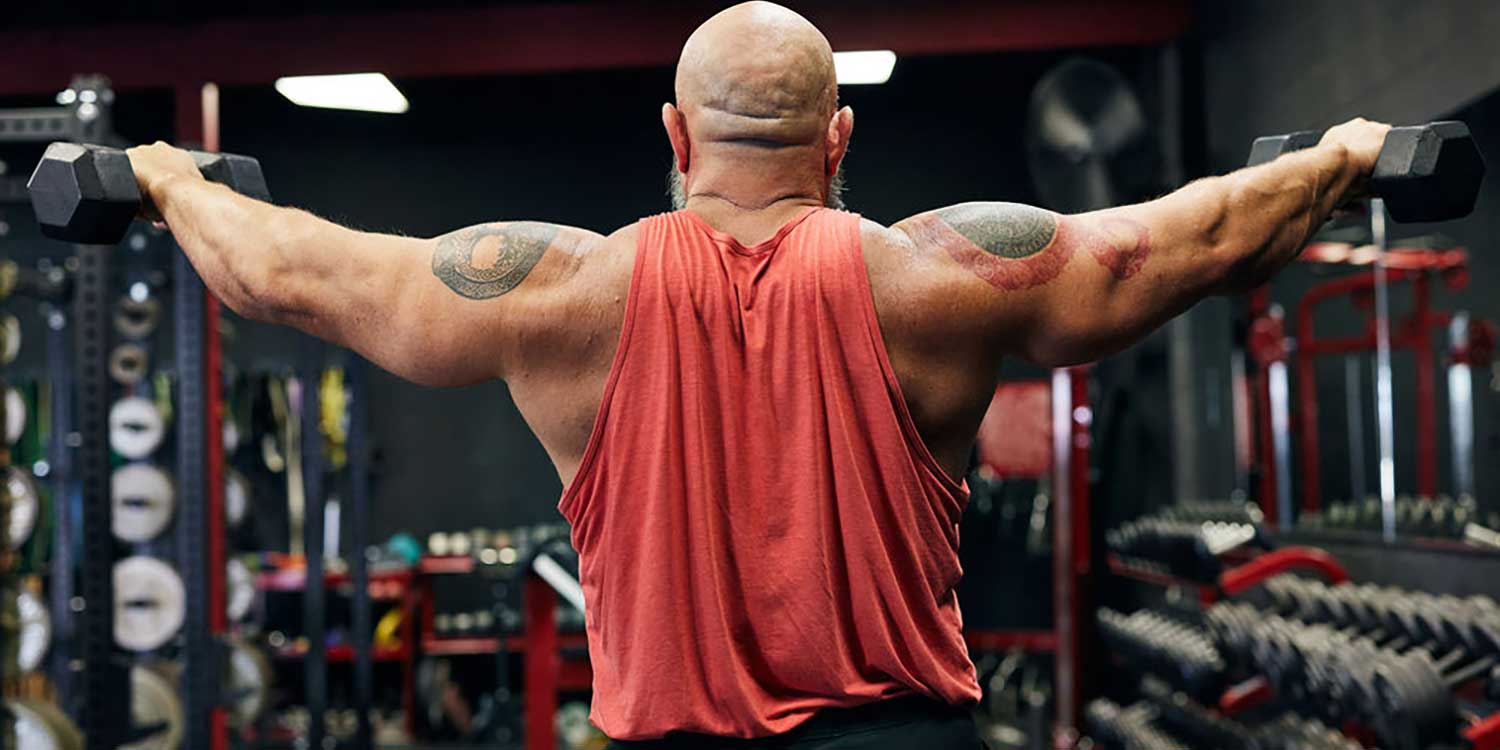
Cables or dumbbells for lateral raises? Both build the side delts, but one has a real advantage most lifters never think about: where the tension lives in the rep. Understanding that makes your lateral raises work better no matter which you use. Here is the honest comparison.
The Difference Is Where the Tension Is
With a dumbbell, the resistance comes straight down from gravity, so the side delt feels the most tension near the top of the raise and almost none at the bottom, where your arm is down at your side. With a cable set low and across your body, the tension stays on the side delt through the whole range, including the stretched bottom position. That difference is the heart of the comparison.
Why Cables Often Win
The side delt grows well from being loaded in its stretched position, the bottom of the raise. Dumbbells give you almost nothing there, while a low cable loads that stretch through the whole rep. That constant tension, especially at the stretch, is why many lifters find cables build the side delts better. A cable lateral raise tends to feel like the side delt is working the entire set, not just at the top.
Where Dumbbells Still Shine
Dumbbells are not bad, they are just different. They are convenient, you can do both arms at once, and you can knock out high-rep sets fast. You can also fix their weak spot by leaning away from the dumbbell, holding onto something and tilting your body so there is tension on the side delt at the bottom of the raise. A lean-away dumbbell raise loads the stretch much more like a cable does.
How to Use Both
You do not have to choose. A great approach is to use cables for your main, focused side delt work where you want constant tension and the loaded stretch, and use dumbbells for convenient high-rep volume or burnout sets at the end. Or lean away on your dumbbell raises to get the stretch benefit. The best lateral raise is the one you can feel in your side delt through the whole range.
Whatever You Use, Do It Right
The tool matters less than the technique. Cable or dumbbell, the rules are the same: moderate weight, no swinging, no shrugging, control the whole range, and load the stretch at the bottom. Get those right and both tools build the side delts. Get them wrong and neither one will.
The Gegns Gym Way
The Gegns Gym Shoulder Training Manual leans on cables and lean-away dumbbell raises to keep tension on the side delt through the stretch, where it grows. Use the tool that lets you feel the side delt the whole way, and the width follows.
Build Wider, Capped Shoulders
Stop letting your front delts run the show. Our Shoulder Training Manual leads with the side delts that actually make you wider and trains all three heads, the way we train them at Gegns Gym. Join the test group and the waitlist now.
Get the Shoulder Training Manual ›