
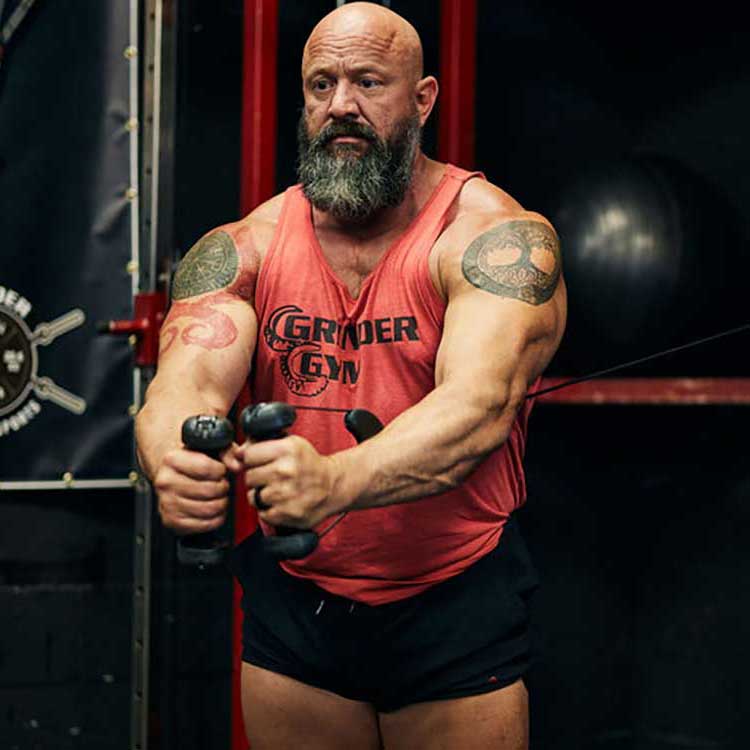
Most lifters train chest the same way for years. Flat bench, a little incline if they remember, maybe a few flyes at the end. Then they wonder why their chest looks flat, hangs low, and never fills out the way they pictured.
The chest is not one muscle you blast with one lift. It is a fan of muscle with regions that respond to different angles, and it grows best when you train the part everyone ignores and learn to load it where it actually builds. This is the foundation. Get this right and every chest workout you run from here gets better.
What the Chest Actually Is
Your chest is built mostly from the pectoralis major, a big fan-shaped muscle that runs from your collarbone and sternum out to your upper arm. Under it sits the smaller pectoralis minor, which you do not see but which helps move the shoulder blade.
The pec major has fibers that run at different angles. The fibers up near the collarbone, the clavicular head or what we call the upper chest, pull the arm up and across. The fibers from the sternum, the sternocostal head that makes up the mid and lower chest, pull the arm across and down. Same muscle, different jobs, different angles.
That is the whole reason upper, mid, and lower chest matters. You are not training three separate muscles. You are changing the angle you press at so the region you want does more of the work.
Why Most Chests End Up Flat and Bottom-Heavy
Here is the truth most lifters figure out too late. The flat barbell bench, the lift everyone builds their chest around, hits the mid and lower chest hard and the upper chest very little. So if flat pressing is your whole chest program, you build a chest that is thick at the bottom and flat up top. It looks unfinished no matter how much you bench.
The second mistake is range. Most people press in the easy middle of the movement and never let the chest get into a real stretch at the bottom. The stretched position, where the chest is loaded and lengthened, is where it grows the most. Skip it and you leave size on the table.
Fix those two things, train the upper chest on purpose and own the stretch, and the chest starts to fill out.
The Three Regions and How to Hit Them
Upper Chest
This is the priority for most people, because it is the part that builds a full, capped look and the part flat pressing neglects. You bias it with incline. Incline barbell press, incline dumbbell press, and low-to-high cable flyes all shift the work onto the upper fibers. Train it first, while you are fresh, not as an afterthought at the end.
Mid Chest
This is the meat of the pec and the easiest region to hit. Flat barbell and dumbbell pressing, the flat machine press, and flat or pec-deck flyes all drive the mid chest. Most people already train this plenty. Keep it in, but it does not need to dominate the whole session.
Lower Chest
The lower fibers run down toward the bottom of the sternum, and you hit them by pressing and flying on a downward angle. Dips with a slight forward lean and high-to-low cable flyes are the go-to. A developed lower chest gives the chest a clean line at the bottom instead of a soft fade.
The Strategies That Actually Build a Chest
Knowing the regions is half of it. Here is how you actually grow them.
Lead with the lagging region. For most people that is the upper chest, so it goes first when you have the most energy. Whatever lags, train it when you are fresh.
Own the stretch. On every flye and every press, control the way down and let the chest load in the stretched position before you drive back up. A deep dumbbell flye with a pause at the bottom does more than a hundred sloppy half-reps. The stretch under load is where the growth signal is strongest.
Press for mass, flye for the stretch. Presses let you move the most weight and build the most total chest mass. Flyes and cables put the chest in positions a barbell cannot and keep tension on it where free weights run out. You want both.
Progress over time. Add a little each week. A bit more weight, a clean extra rep, a slightly deeper stretch. The chest grows when you give it a reason to, week after week, not when you go to failure once and never beat it.
Warm the shoulders first. Heavy pressing is hard on the shoulders. A few minutes of rotator cuff and band work before you press keeps you healthy enough to train the chest hard for years, not weeks.
Putting It Together
You do not need a complicated chest day. A simple, effective session looks like this:
- Incline press for the upper chest, while fresh
- Flat or machine press for mid chest mass
- Deep dumbbell flye or pec deck, paused in the stretch
- Dips or high-to-low cable flye for the lower chest
Four movements, all three regions, the stretch trained on purpose. Run that hard and progress it, and you are already ahead of most lifters who have been benching for years.
The Gegns Gym Way
This is the foundation the Gegns Gym Chest Training Manual is built on: upper chest first, own the stretch, train all three regions, and progress like you mean it. The manual takes these basics and turns them into a structured program that brings the chest up phase by phase.
Start here. Train the chest like a fan of muscle with regions and a stretch, not one lift you grind for years, and you will build the full, balanced chest you have been after.
Build a Fuller, Thicker Chest
Stop building a flat, bottom-heavy chest. Our Chest Training Manual prioritizes the upper chest and the stretch where the chest actually grows, the way we train it at Gegns Gym. Join the test group and the waitlist now.
Get the Chest Training Manual ›