
You do not need every chest exercise in the gym. You need a few of the right ones, chosen for what they actually do, and you need to run them with intent. Most lifters do the opposite. They collect a dozen pressing variations, train them all halfway, and wonder why nothing moves. This is how to pick the chest movements that build a chest and leave the rest.
The Three Jobs a Chest Movement Can Do
Every chest exercise falls into one of three buckets, and a complete chest day covers all three.
Presses move the most weight and build the most mass. Barbell, dumbbell, and machine presses let you load the chest heavy and add weight over time. This is the foundation of size and strength.
Flyes and cables load the stretch and isolate the chest. They take the triceps mostly out of it and put deep tension on the chest in the lengthened position, where it grows the most. This is the part most lifters skip.
Dips load the lower chest under a deep stretch. A bodyweight or weighted movement that hits the lower fibers and the stretch at the same time.
Cover those three jobs and you have trained the whole chest. Miss one and you leave growth on the table.
Choosing Your Presses
Presses are your heavy work, so pick them by angle and by tool.
By angle: Incline biases the upper chest, flat biases the mid, and a slight decline or a dip biases the lower. For most people the upper chest lags, so an incline press earns the first slot. Flat pressing is your mid-chest mass builder. You do not need all three angles every session, but over a week you want the upper chest covered.
By tool: A barbell lets you load the most weight and is great for pure strength and progressive overload. Dumbbells give you a deeper stretch at the bottom and force each side to work on its own, which is why they are so good for chest size. Machines let you push close to failure safely without a spotter and keep constant tension on the chest. None is better than the others. Use the barbell to get strong, the dumbbells for the stretch and the size, and the machine to finish hard.
A simple rule: one heavy pressing movement to build strength, one pressing movement chosen for the stretch and the region you want.
Choosing Your Flye or Stretch Movement
This is the slot most lifters get wrong by skipping it. Your flye or cable movement is not a finisher you throw in if you have time. It is where the chest gets loaded in the stretch.
Dumbbell flyes give the deepest stretch. Lower with control, let the chest pull long at the bottom, pause, and bring the dumbbells back up like you are hugging a tree. Do not turn it into a press.
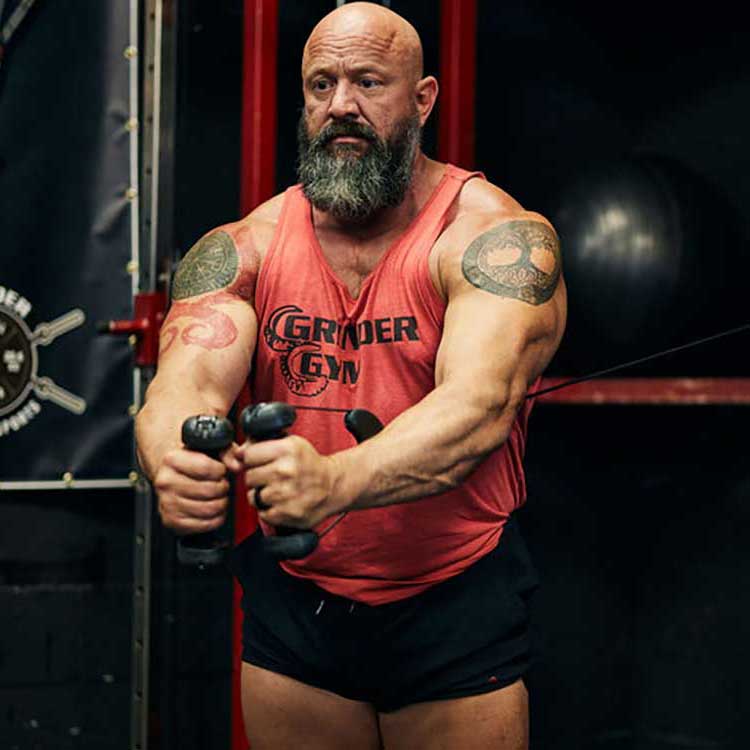
Cable flyes keep tension on the chest the whole way, including at the top where dumbbells go light. Set the cables high to bias the lower chest, low to bias the upper, or straight across for the mid.
The pec deck is the easiest way to load the chest with constant tension and no balancing, which makes it great for pushing close to failure.
Pick one stretch movement per chest day and treat it as seriously as your pressing. Control the eccentric, own the stretch, and you will feel the chest work in a way pressing alone never delivers.
A Simple Way to Build Your Chest Day
You do not need a long list. Pick one movement from each job:
- An incline press for the upper chest, while you are fresh
- A flat or machine press for mid-chest mass
- A flye or cable for the stretch, paused at the bottom
- Dips for the lower chest and a loaded stretch
Four movements, all three jobs covered, every region trained. That is a complete chest day, and it beats eight half-trained pressing variations every time.
Matching Exercises to Your Weak Point
Once you have the base, you adjust for what you are missing.
- Upper chest lags? Lead with incline, add a low-to-high cable flye, and put your best energy there.
- No real stretch in your training? Add a deep dumbbell flye and slow the eccentric down. Make the stretch the priority for a few weeks.
- Chest strong but flat-looking? You probably press plenty and stretch little. Cut a pressing variation and add a real flye.
- Lower chest fading? Add weighted dips with a forward lean and high-to-low cable flyes.
Train your weak point first, when you are fresh, and give it the work the rest of your chest already gets.
What You Can Skip
You do not need five different barbell pressing variations. You do not need to chase a new chest exercise every week. And you do not need endless sets to failure on everything. More movements is not more growth. The right movements, run hard and progressed over time, is what builds the chest.
The Gegns Gym Way
This is how exercise selection works inside the Gegns Gym Chest Training Manual. Cover the three jobs, lead with the region that lags, load the stretch every session, and progress the right movements over time instead of collecting random ones. Pick with purpose, train with intent, and the chest builds.
Build a Fuller, Thicker Chest
Stop building a flat, bottom-heavy chest. Our Chest Training Manual prioritizes the upper chest and the stretch where the chest actually grows, the way we train it at Gegns Gym. Join the test group and the waitlist now.
Get the Chest Training Manual ›